Temperature Drives Shopping Behaviour
Walk into an uncomfortably warm shop and you’ll leave faster. Browse less. Buy less. Probably won’t return. Retail temperature directly affects customer behaviour, dwell time and purchasing decisions.
Research demonstrates customers spend 20-30% less time in uncomfortably warm retail environments. Reduced dwell time means fewer products examined, fewer impulse purchases and lower transaction values. For retailers, climate control isn’t about comfort, it’s about protecting revenue.
The Retail Temperature Challenge
Retail spaces combine multiple climate control challenges.
Variable Occupancy: Empty at opening, packed during lunch, quiet mid-afternoon, busy again at closing. Customer numbers fluctuate dramatically throughout the day and week. Your climate control must handle these variations without wasting energy during quiet periods.
Door Opening Cycles: Constant door opening brings outside air into conditioned space. Hot summer air or cold winter air enters every time customers arrive. This constant infiltration increases cooling and heating loads substantially.
Solar Gain: Shop windows create enormous heat gain. Large glass frontages designed for product display act like greenhouses during summer, raising internal temperatures significantly.
Product Display Considerations: Air conditioning must maintain comfortable temperature without creating drafts that disturb merchandise displays or make customers uncomfortable while browsing.
Staff Comfort: Employees working 8-hour shifts need comfortable conditions. Overheated staff provide poorer service, make more mistakes and have higher turnover.
How Temperature Affects Retail Sales
Dwell Time: Comfortable shops retain customers longer. Each additional minute browsing increases purchase probability and average transaction value.
Staff Performance: Comfortable employees provide better service. They’re more patient, helpful and attentive. Service quality directly impacts sales and return visits.
Product Protection: Some products, clothing, electronics, cosmetics, food, require temperature control for quality maintenance. Proper climate control protects inventory investment.
Brand Perception: Premium brands require premium environments. Luxury retailers understand climate control contributes to perceived value. Discount retailers also benefit, comfortable shopping environments encourage longer visits and larger baskets.
Online Reviews: Temperature appears in retail reviews frequently. “Too hot” drives negative feedback. Comfortable environments generate positive mentions and recommendations.
Retail Air Conditioning System Types
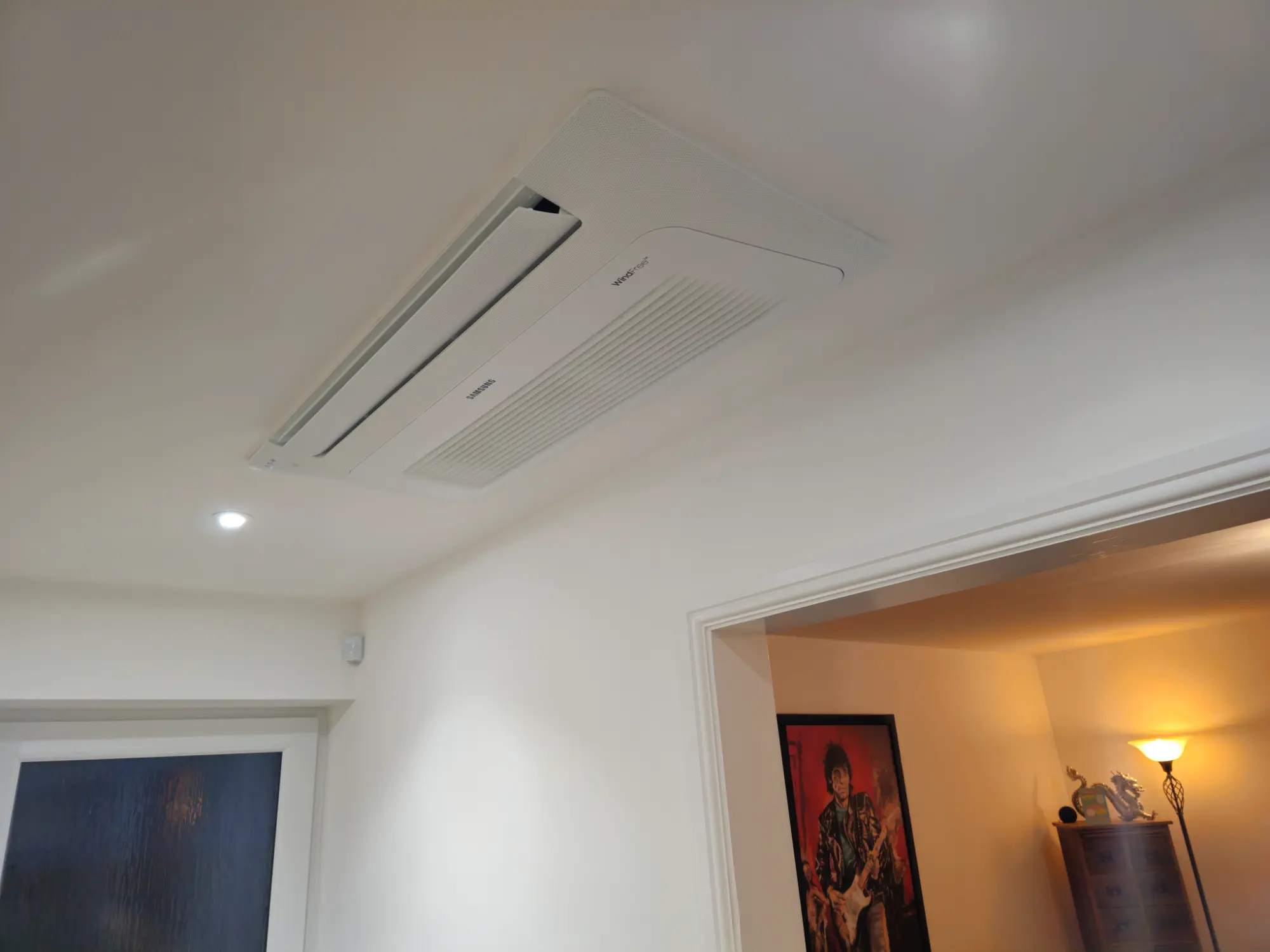
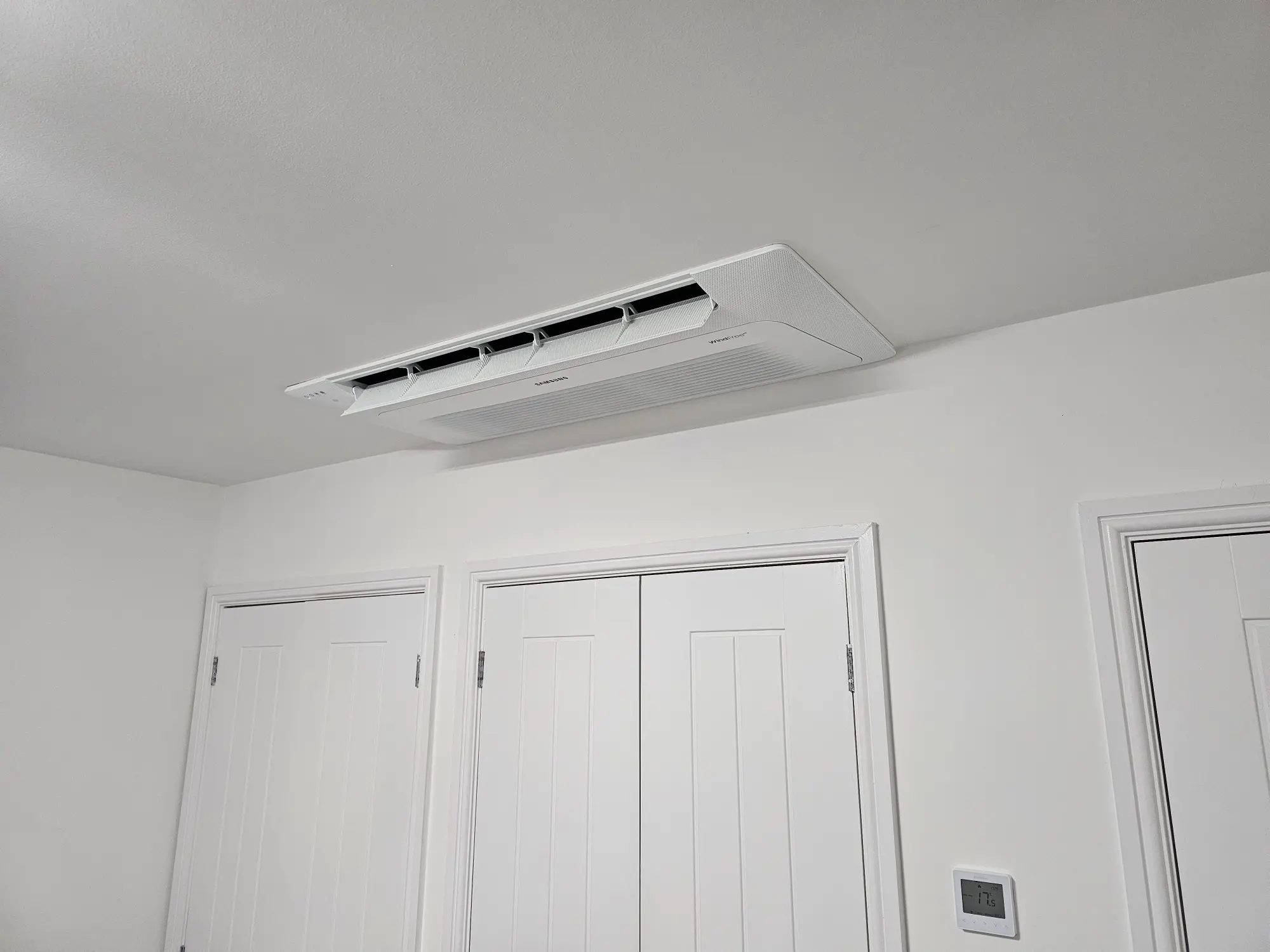
Ceiling Cassettes: Four-way cassette units excel in retail environments. Ceiling-mounted, discrete appearance, even air distribution without occupying valuable floor or wall space. Perfect for shops with suspended ceilings.
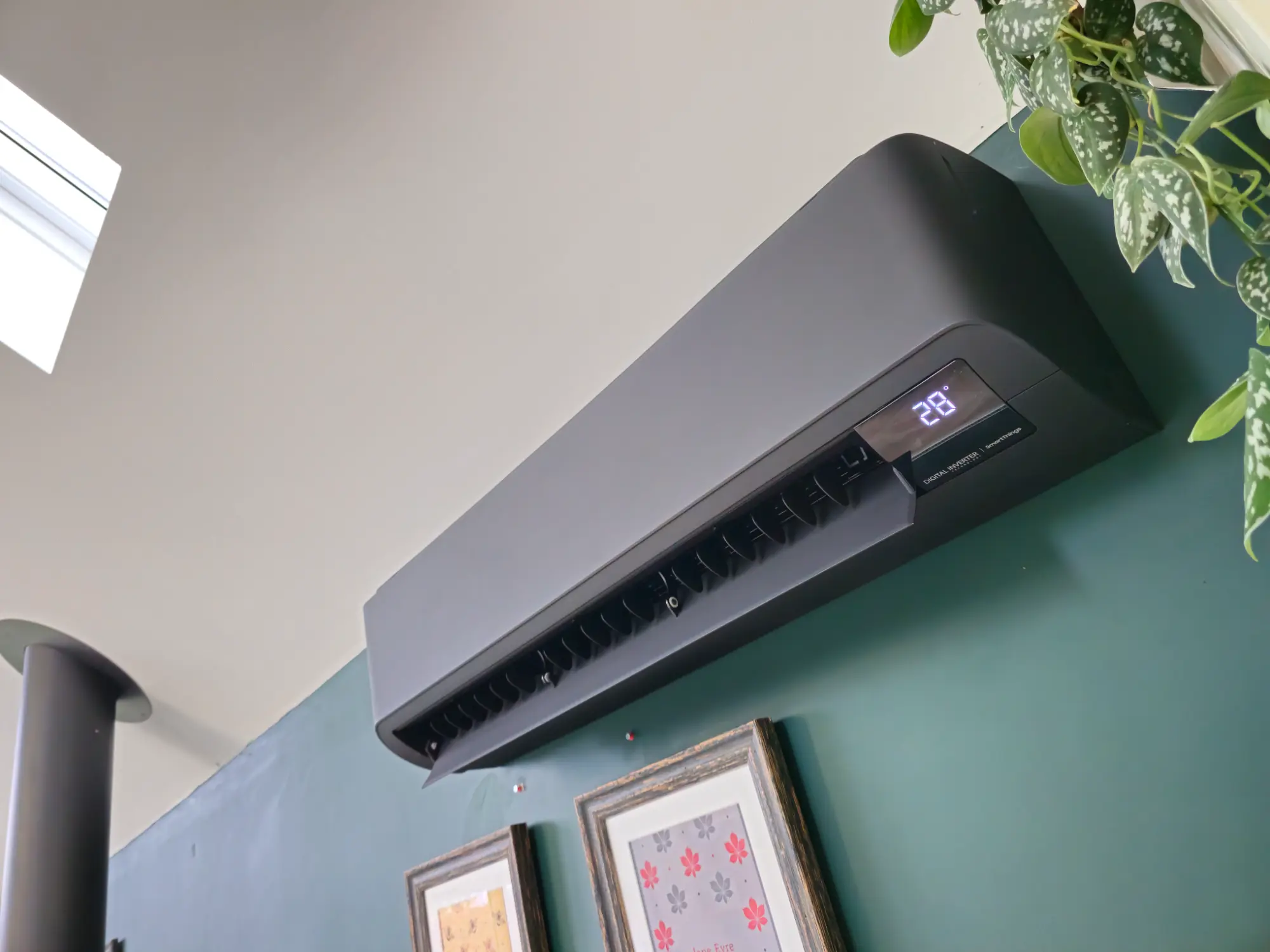
Wall-Mounted Units: Cost-effective for smaller retail units. Modern designs blend with shop interiors while providing effective climate control. Position carefully to avoid merchandise displays.
Ducted Systems: Completely hidden with only vent grilles visible. Provides uniform appearance without visible equipment. Requires ceiling void space but delivers excellent aesthetics for premium retail environments.
VRV/VRF Systems: Large retail spaces or multi-zone shops benefit from variable refrigerant systems. Independent control for different shop areas, sales floor, stockroom, staff areas, fitting rooms.
Under-Ceiling Units: High-wall units distributing air downward. Suitable for retail spaces with limited ceiling access or where ducting isn’t feasible.
Capacity Calculation for Retail
Retail heat load calculations must account for multiple factors:
Occupancy Density: High-traffic retail (supermarkets, busy high street): 150-180 watts per square meter. Medium traffic (clothing, homeware): 120-150 watts/m². Low traffic (specialist retailers, furniture): 100-120 watts/m².
Window Area: Shops with large glass frontages require substantial additional capacity. South and west-facing windows create maximum solar gain requiring 30-50% capacity increase.
Lighting: Retail lighting generates significant heat. Halogen spotlights produce far more heat than LED. Older shops with inefficient lighting require higher cooling capacity.
Door Opening: Shops with constantly opening doors need 15-25% additional capacity to handle infiltration loads.
Professional heat load calculations prevent undersizing (inadequate comfort during busy periods) and oversizing (wasted money and poor humidity control).
Energy Efficiency Matters
Retail air conditioning operates long hours, typically 10-12 hours daily, six or seven days weekly. Efficiency differences compound into substantial annual cost variations.
Target SEER above 7.0 for retail applications. Each SEER point improvement saves approximately 12-15% on running costs. For a shop spending £2,000 annually on air conditioning, upgrading from SEER 6.0 to SEER 8.0 saves roughly £330 yearly, £4,950 over 15 years.
Inverter technology essential. Variable speed compressors adjust output continuously to match actual demand. During quiet periods systems ramp down, saving energy while maintaining comfortable temperature. During busy periods they ramp up, ensuring comfort when you need it most.
Zone Control Strategy
Larger retail spaces benefit from zone control.
Sales Floor: Primary customer area requiring consistent comfortable temperature. Often the largest zone and main focus.
Stockroom: Less critical than sales floor but still important for staff comfort and product protection. Can run slightly warmer in summer, cooler in winter.
Staff Areas: Break rooms and offices need independent control. Staff spending entire shifts need optimal comfort.
Fitting Rooms: Higher occupancy density in small spaces. Independent control prevents overheating while customers try on clothes.
Window Displays: Areas with maximum solar gain may need dedicated cooling to prevent heat affecting nearby merchandise or creating hot zones customers avoid.
Air Distribution Planning
Retail air conditioning must distribute air without disrupting merchandise or creating uncomfortable drafts.
Avoid Direct Airflow: Position units and vents so cooled air doesn’t blow directly onto product displays. Disturbed clothing displays, moving signage or papers blowing off counters create poor impressions.
Even Coverage: Design for uniform temperature throughout sales floor. Hot spots or cold zones create uncomfortable browsing and concentrate customers in limited areas.
Customer Comfort: Customers moving slowly while browsing are more sensitive to drafts than people walking briskly. Gentle air distribution maintains comfort without creating uncomfortable air movement.
Noise Considerations
Retail environments need quiet air conditioning that doesn’t interfere with customer experience or staff communication.
Target 35-45 dB maximum for retail applications. This is noticeable but not intrusive, customers and staff can converse normally without competing with system noise.
Premium retail environments (jewellery, high-end fashion, art galleries) benefit from even quieter operation (30-35 dB) maintaining sophisticated atmosphere.
Installation Timing
Retail air conditioning installation requires careful scheduling to minimise trading disruption.
New Shops: Install during fit-out before stock arrival. Easier access, lower costs, better integration with shop design.
Existing Retailers: Schedule installation during closed periods, overnight, closed days or planned closure weeks. For larger projects, phased installation maintains partial operation.
Typical timelines: Small shops (50-100m²) require 2-3 days. Medium shops (100-300m²) need 4-7 days. Large retail spaces (300m²+) may take 1-2 weeks depending on complexity.
Heat Pump Heating for Winter
Retail air conditioning provides efficient heating during winter. Heat pump operation delivers 3-4 times more heat than electricity consumed, far more efficient than traditional electric heating.
Shops currently using expensive electric heating can offset air conditioning costs through winter heating savings. The system pays for itself through reduced heating bills while providing summer cooling as additional benefit.
Costs and Investment
Retail air conditioning investment varies based on shop size and complexity.
Small shop (50-100m²): £4,000-8,000 Medium shop (100-300m²): £8,000-18,000 Large shop (300-500m²): £18,000-35,000+
These investments deliver returns through:
Increased Sales: Comfortable customers browse longer and spend more. Even modest sales increases quickly justify air conditioning investment.
Staff Retention: Comfortable working conditions reduce turnover. Retail recruitment costs £1,500-3,000 per employee. Retaining staff through better environment saves money.
Product Protection: Temperature control protects inventory from heat damage, maintaining product quality and reducing waste.
Brand Enhancement: Comfortable shopping environment enhances brand perception, supporting premium pricing and customer loyalty.
Many retailers see ROI within 2-3 years through combination of increased sales and reduced operating costs.
Maintenance Requirements
Retail air conditioning requires regular professional maintenance.
Quarterly Service: High-use retail systems benefit from quarterly maintenance, filter cleaning, performance checks, refrigerant verification.
Biannual Minimum: Less intensive use allows biannual servicing. Filter checks remain essential monthly in dusty retail environments.
Service contracts provide scheduled maintenance, priority breakdown response and predictable budgeting. For retailers depending on comfortable shopping environment, maintenance contracts prevent costly downtime during peak trading periods.
Planning Permission and Listed Buildings
Retail units in conservation areas or listed buildings may require planning permission for external air conditioning units.
Position units discreetly, rear elevations, internal courtyards, away from primary street frontages. Modern units are compact and can often be positioned with minimal visual impact.
We handle liaison with planning authorities and conservation officers, recommending positioning that balances aesthetic concerns with system performance.
The Competitive Advantage
Retail is competitive. Comfortable shops have genuine advantage over competitors battling temperature issues.
Customers choose pleasant shopping experiences. Online shopping offers convenience but lacks the sensory experience of physical retail. Climate control is part of the experience that keeps customers visiting stores rather than ordering online.
Your competitors struggling with uncomfortable temperatures lose customers to you. Proper retail air conditioning turns climate control from problem into competitive weapon.
Starting the Conversation
Retail air conditioning requires expertise beyond domestic installation. During site surveys we assess:
- Shop layout and customer flow
- Window area and solar gain
- Occupancy patterns and peak trading times
- Door opening frequency
- Product display requirements
- Building constraints and installation access
- Budget and return on investment calculations
You’ll receive detailed proposals explaining recommended systems, capacity calculations, installation approach, energy costs, expected sales impact and ongoing maintenance requirements.
We’ve installed retail air conditioning for clothing shops, convenience stores, pharmacies, furniture retailers, mobile phone shops, gift shops, and specialty retailers across Norfolk, Cambridgeshire and Lincolnshire.
Our commercial team understands retail environments and delivers solutions that protect revenue while creating comfortable shopping experiences your customers appreciate and remember.