Temperature Drives Restaurant Success
Walk into an uncomfortably warm restaurant and you’ll leave faster, order less, and probably won’t return. Your staff suffer worse, chefs working 12-hour shifts in sweltering kitchens, front-of-house teams serving while overheated, everyone’s performance declining as temperature rises.
Restaurant air conditioning isn’t a luxury. It’s infrastructure that protects revenue, retains staff and maintains food safety standards. Get it wrong and you’re fighting an expensive, losing battle.
Why Restaurants Are Climate Control Nightmares
Restaurants combine everything that makes air conditioning difficult. Commercial kitchens generate enormous heat from ovens, grills, fryers and burners. Dining areas fill with heat-generating customers. Door opening cycles bring outside air in. Steam, grease, and humidity complicate matters further.
A typical restaurant kitchen generates 150-250 watts of heat per square meter, two to three times residential heat loads. During service, this heat must be removed continuously or temperatures become unbearable and dangerous.
Dining areas face different challenges. Customers expect comfortable temperature regardless of what’s happening in the kitchen. Windows create solar gain. Peak occupancy varies dramatically, empty at 3pm, packed at 7pm. Your climate control must handle these fluctuations.
Kitchen Climate Control Requirements
Kitchen air conditioning requires specialised approach. Standard systems struggle with heat, grease, and steam.
Heat Load Calculation: Professional calculations account for all heat sources, cooking equipment wattage, lighting, occupancy, and ventilation heat loss. Undercalculate and your system fails during service when you need it most.
Makeup Air Integration: Kitchen extraction hoods remove cooking fumes and steam but also remove conditioned air. Makeup air systems replace this extracted air, maintaining comfortable temperature and proper ventilation balance.
Grease-Resistant Equipment: Kitchen air conditioning must withstand grease-laden air. Standard filters clog rapidly in kitchen environments. Specify grease-resistant filters and accessible maintenance points.
Temperature Zones: Keep kitchens cooler than dining areas. Chefs working near hot equipment need 18-20°C ambient temperature for tolerable conditions. Dining areas maintain 21-23°C for customer comfort.
Dining Area Climate Control
Dining spaces need different solutions than kitchens.
Variable Occupancy: Empty restaurants at lunch, full at dinner, occupancy changes dramatically throughout the day. Modern VRV systems adjust output automatically, maintaining comfort while minimising energy waste during quiet periods.
Noise Levels: Kitchen machinery can be loud. Dining areas demand quiet operation for pleasant atmosphere. Specify systems achieving 35-40 dB maximum, noticeable but not intrusive during conversation.
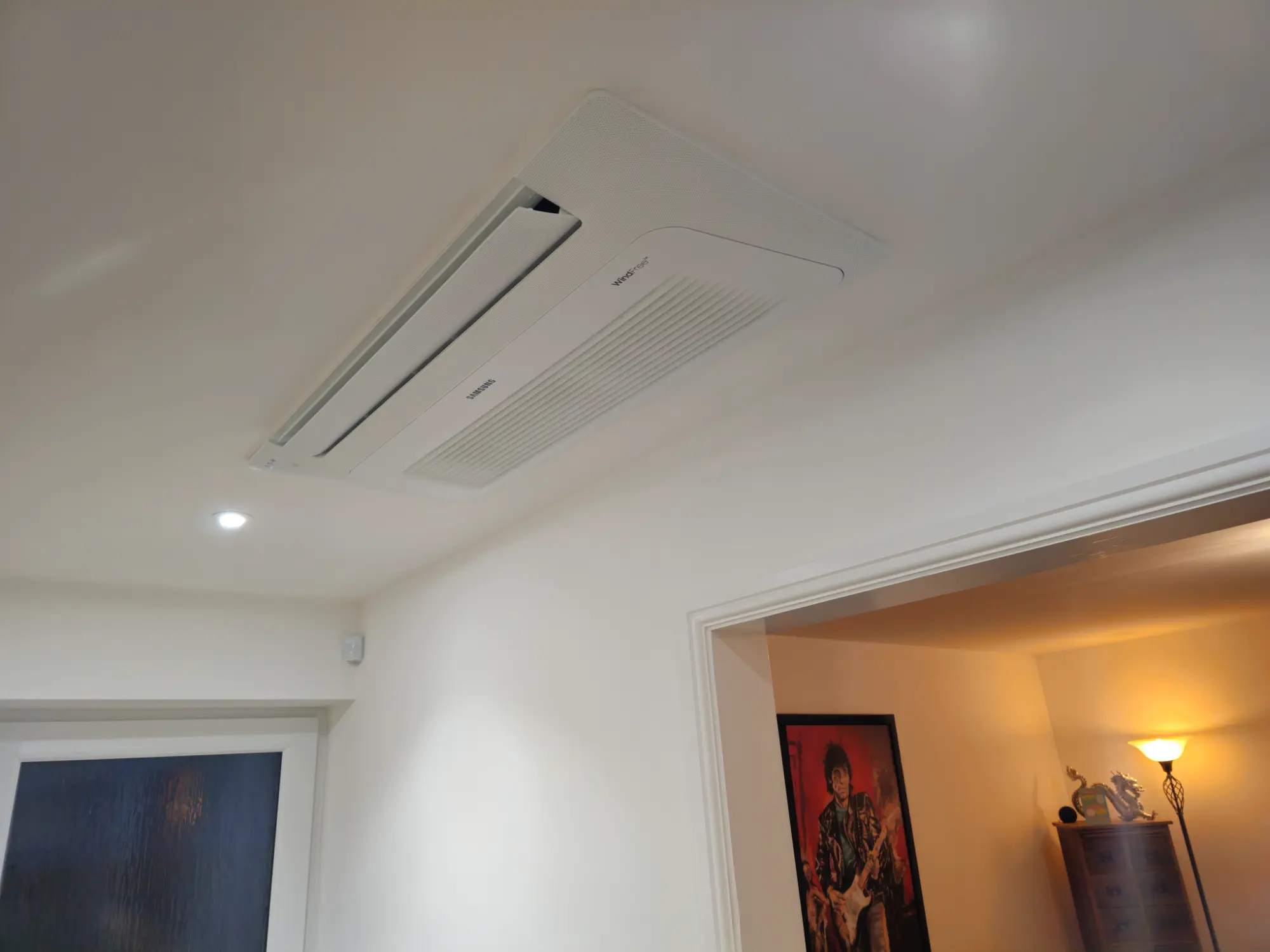
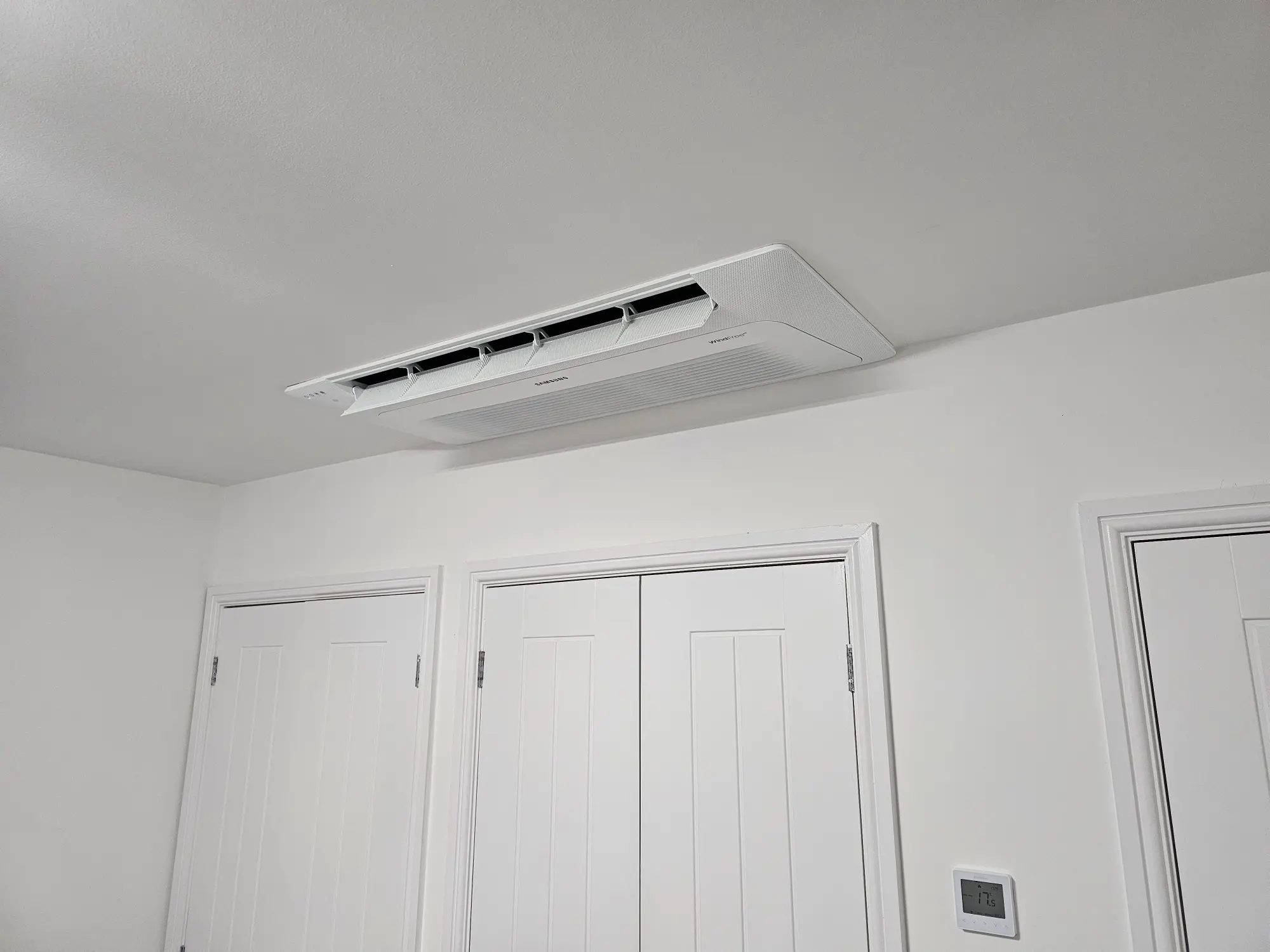
Air Distribution: Avoid direct airflow on diners. Ceiling cassette units distribute air in four directions, providing even temperature without creating uncomfortable drafts. Ducted systems offer even greater control but require ceiling space.
Humidity Control: Restaurant cooking generates steam. Excess humidity makes spaces feel warmer and damages décor. Quality air conditioning systems remove moisture while cooling, maintaining comfortable 40-60% relative humidity.
System Types for Restaurants
VRV/VRF Systems: Variable refrigerant systems serve multiple indoor units from one or more outdoor units. Perfect for restaurants needing different temperatures in kitchen, dining, and front-of-house areas. Heat recovery models transfer waste heat from kitchens to heat other areas, exceptional efficiency.
Split Systems with Ducting: For smaller restaurants, ducted split systems provide good performance at lower cost than VRV. Single outdoor unit serves multiple zones through ductwork hidden in ceiling voids.
Cassette Units: Ceiling-mounted four-way cassettes suit dining areas beautifully. Discrete appearance, even air distribution, effective coverage. Multiple cassettes create zones for different dining sections.
Dedicated Kitchen Units: Heat-resistant systems designed specifically for commercial kitchen environments. Higher capacity, grease-resistant construction, simplified maintenance access.
Capacity Planning for Variable Loads
Restaurants experience dramatic load variations. Lunch service, dinner service, private events, and quiet periods all demand different cooling capacity.
Oversizing is tempting but problematic. Massively oversized systems short-cycle during quiet periods, providing poor humidity control and wasting energy. Modern inverter-driven systems handle load variations by adjusting output continuously, far more effective than traditional fixed-speed equipment.
Calculate capacity for peak service periods with full occupancy. Quality inverter systems then ramp down during quiet periods, maintaining comfort efficiently across your entire operating range.
Energy Efficiency Matters More
Restaurants operate long hours. A system running 12-16 hours daily multiplies efficiency differences into substantial cost variations.
SEER ratings above 7.0 for commercial applications. Each point of SEER improvement saves roughly 12-15% on running costs. For a restaurant spending £3,000 annually on air conditioning, upgrading from SEER 6.0 to SEER 8.0 saves approximately £500 yearly, £7,500 over 15 years.
Inverter technology is essential. Variable speed compressors adjust output precisely to demand, dramatically reducing energy consumption compared to fixed-speed systems cycling on and off.
Ventilation Integration
Air conditioning and ventilation must work together, not against each other.
Kitchen extraction removes enormous air volumes, often 10-15 air changes per hour. This extracted air must be replaced (makeup air) to maintain comfortable temperature and prevent negative pressure pulling in outside air through every gap.
Coordinate air conditioning design with extraction and makeup air systems. Poor integration means fighting against ventilation, wasting energy cooling air that’s immediately extracted or struggling to maintain temperature as uncontrolled outside air enters.
Maintenance Requirements
Restaurant air conditioning works hard in harsh conditions. Regular professional maintenance isn’t optional.
Filter Changes: Monthly in kitchens, quarterly minimum in dining areas. Grease-laden air clogs filters rapidly. Clean filters maintain efficiency and prevent system damage.
Coil Cleaning: Kitchen systems need quarterly coil cleaning to remove grease buildup. Dining area systems require biannual cleaning.
Refrigerant Checks: Annual refrigerant level verification prevents slow leaks reducing performance and increasing costs.
Drainage Maintenance: Condensate drains block with debris. Regular clearing prevents water damage and maintains operation.
Service contracts providing scheduled maintenance, priority breakdown response, and predictable annual costs make sense for restaurants. Downtime during service costs far more than maintenance.
Food Safety Considerations
Temperature affects food safety directly. Kitchens above 25°C accelerate bacterial growth in stored ingredients. Effective air conditioning helps maintain safe food preparation conditions.
Environmental Health Officers assess temperature control during inspections. Adequate kitchen cooling demonstrates your commitment to food safety standards.
Staff Retention Benefits
Chef shortages affect the entire hospitality sector. Comfortable working conditions help retain skilled kitchen staff.
Chefs working in 35°C kitchens experience heat stress, reduced performance, and high turnover. Maintain 18-20°C ambient temperature and you’ll see improved morale, better performance, and reduced recruitment costs.
Front-of-house staff also benefit. Comfortable temperature means better service, fewer mistakes, and improved customer interactions. Happy staff create better customer experiences.
Customer Experience Impact
Diners notice temperature immediately. Too warm and they’ll order less, eat quickly, and leave. Comfortable temperature encourages longer stays, additional courses and return visits.
Reviews mention temperature frequently. “Too hot” appears in negative restaurant reviews far more often than you’d expect. Proper climate control protects your online reputation.
Installation Timing and Disruption
Restaurant air conditioning installation requires coordination with your operating schedule.
New builds or major refurbishments: Install during construction before final finishes. Easier access, lower costs, better integration with other building services.
Existing restaurants: Schedule installation during closed periods, between services, closed days, or planned closure weeks. For larger projects, phased installation maintains partial operation throughout.
Typical installation timelines: Small restaurants (50-80 covers) require 3-5 days. Larger establishments (100+ covers) need 1-2 weeks depending on complexity.
Costs and ROI
Budget £8,000-15,000 for small restaurant air conditioning (50-80 covers). Medium establishments (80-150 covers) typically invest £15,000-30,000. Large restaurants and those requiring extensive kitchen cooling may spend £30,000-60,000+.
These investments deliver returns through:
- Reduced staff turnover (recruitment costs £2,000-4,000 per chef)
- Increased revenue (comfortable diners stay longer, order more)
- Energy savings (efficient systems reduce electricity costs)
- Protected reputation (positive reviews mentioning comfort)
Many restaurateurs see ROI within 2-4 years through combination of cost savings and revenue protection.
Design Consultation Matters
Restaurant air conditioning requires expertise beyond residential installation. During site surveys we assess:
- Kitchen equipment heat output
- Extraction and makeup air systems
- Dining area capacity and layout
- Operating hours and usage patterns
- Building constraints and installation access
- Budget and timeline requirements
You’ll receive detailed proposals explaining recommended systems, capacity calculations, installation approach, energy costs and ongoing maintenance requirements.
The Competitive Advantage
Restaurants with effective climate control have genuine competitive advantage. Customers choose comfortable dining experiences. Staff prefer working in pleasant conditions. Food safety improves. Operating costs decrease.
Your competitors battling temperature issues lose customers, struggle with recruitment, and waste money on inefficient systems. Proper restaurant air conditioning turns climate control from problem into advantage.
We’ve installed systems for restaurants, cafés, pubs and hospitality venues across Norfolk, Cambridgeshire, and Lincolnshire. Our commercial team understands restaurant environments and delivers solutions that work during the chaos of service, not just on specification sheets.